

Red Light Therapy and Testosterone: What Does the Research Say?
Short answerRed light therapy has a plausible link to testosterone production, with encouraging animal findings. Human studies also suggest benefits for some pain and recovery outcomes, plus early sleep and wellbeing signals. These could support habits relevant to hormone health. They do not establish that a home panel raises testosterone or treats low levels. Persistent symptoms need medical assessment. [1] [3] [4] [7] [11] [13] [14] [15] |
Testosterone affects sex drive, muscle and bone health. That makes light an interesting area to study. The key is to separate three questions: can light affect cells, can it change hormone levels, and can it improve how someone feels? Each needs its own evidence.
Why researchers are studying red light and testosterone
Most testosterone in men is made by Leydig cells. These are the hormone-producing cells in the testicles. These cells rely on mitochondria, the small structures that help cells make energy. Mitochondria also take part in the process that turns cholesterol into hormones. [1]
Red light therapy uses red and near-infrared light. Near-infrared is a type of light just beyond what our eyes can see. Researchers study how these wavelengths influence cell activity, including energy production. This process is called photobiomodulation, which means using light to change how cells function. [2]
Could light help the cells that make testosterone work better? That gives researchers a clear question to test. The mechanism explains the interest. It does not predict what your blood test will show.
There is also a useful distinction within the testicles. Leydig cells make testosterone. Other cells develop into sperm, with support from neighbouring cells. A change in sperm movement does not measure how much testosterone the body makes. [1] [5]
Indirect pathways: sleep, stress, energy and pain
Light may also be useful through its effects elsewhere in the body. Pain relief and exercise recovery have more human research than testosterone itself. Sleep and stress-related effects are earlier areas of study. The possible links below concern the conditions that support health, rather than direct stimulation of the testicles.
Better sleep
Sleep matters for testosterone. Leproult and Van Cauter (2011) found lower daytime testosterone after sleep restriction in a small study of healthy young men. This makes sleep a relevant pathway to investigate. [12]
Zhao and colleagues (2012) reported better sleep quality after whole-body red light in female basketball players. Chen and colleagues (2026) also found improved self-reported sleep in older adults given near-infrared light, bright white light or both. However, objective sleep measures did not improve, and there was no sham group. Another placebo-controlled study found no clear sleep benefit. Sleep support is promising, but results vary. [11] [17] [13]
More energy and better recovery
Light’s effects on cellular energy help explain interest in muscle recovery. In a small trial, Pinto and colleagues (2016) found better repeated-sprint performance and less perceived fatigue in rugby players. They used a device combining lasers and LEDs. A separate judo trial found no benefit for fatigue or muscle damage. [2] [15] [16]
Better recovery could make staying active more manageable. That does not mean every user will feel more energetic all day. Cellular energy, exercise fatigue and everyday energy are different outcomes. Light also does not replace adequate food or rest. [9]
Less pain and easier movement
Navarro-Ledesma and colleagues (2024) found reduced pain and increased leisure-time physical activity in women with fibromyalgia, a condition causing widespread pain. The placebo-controlled trial used a whole-body red and near-infrared LED bed. The study had manufacturer-linked authors and financial support. [14]
These findings suggest potential benefits for pain management, but the study did not measure testosterone or other male hormones.
What the studies have found
Animal studies show a signal worth following
Ahn and colleagues (2013) studied red laser treatment in rats. Testosterone was higher at some later measurements. Results varied with the wavelength and timing. Parts of the report also conflict. It offers an early clue, but no firm estimate of the effect. [3]
Aqajanpor and colleagues (2025) studied mice with damage to sperm production. A chemotherapy drug or heat caused the damage. Near-infrared laser treatment improved several measures of testicular function. Testosterone rose in the drug-treated group compared with the same injury without laser treatment. [4]
These are encouraging findings about how damaged tissue may respond to light. The mice had specific injuries. Their response may differ from normal hormone changes in healthy men.
Laboratory studies show changes in sperm movement
Ban Frangez and colleagues (2015) studied sperm samples from 30 men with poor sperm movement. Each sample was divided into five parts: four received different LED light treatments, while one remained untreated. Across the four treatments, the percentage of sperm moving quickly forwards increased by an average of 2.83–4.50 percentage points compared with the untreated samples. This was a laboratory experiment, not a treatment given to the men themselves. [5]
Salman Yazdi and colleagues (2014) also treated human sperm samples. Near-infrared laser light improved movement under certain conditions. [6]
Some wavelengths in this research overlap with those used in home panels. However, these studies did not measure testosterone or other hormone changes. A semen sample also receives light directly, whereas skin and other tissues affect how much light reaches the target in the body. Better sperm movement in a laboratory does not establish improved fertility, higher testosterone or greater sexual satisfaction.
A small human study tested whole-body light
Zagatto and colleagues (2020) studied 13 male water polo players during a competition. The athletes were randomly assigned to whole-body red and near-infrared light therapy or a placebo. Each session lasted five minutes immediately after a match, delivering 6.9 J/cm² at an irradiance of 46.17 mW/cm².
The researchers measured testosterone levels but found no statistically significant difference in how these changed over time between the treatment and placebo groups. [7]
This study provides useful early human evidence, although it focused on short treatment sessions in a small group of athletes. Whether longer-term red light therapy, different treatment settings or use in men with low testosterone could produce different results remains an open question for future research.
Bright-light therapy is a different approach
Light can be studied in more than one way. A widely shared report came from the University of Siena. It described improved testosterone and sexual satisfaction after bright-light-box treatment. It was reported at a scientific conference in 2016. [8]
The light box was similar to those used for seasonal mood problems. It was not a red light panel aimed at the testicles. The report cannot show that Nuvibody panels have the same effects. A conference report also gives less detail to assess than a full journal paper.
Where this sits on the evidence ladder
For testosterone, the strongest positive support is currently a plausible mechanism plus early animal findings. Laboratory studies add evidence about sperm responses. Small human studies address different devices and settings, with no reliable clinical benefit established for home panels. [1] [3] [4] [5] [7]
The indirect pathways have human evidence for individual outcomes, strongest here for selected pain and recovery uses. Sleep and stress findings remain mixed or preliminary. Whether any of these benefits leads to higher testosterone is a separate, unconfirmed step. These are possible routes of support, not a demonstrated hormone treatment.
That places testosterone support mainly at the biological and preclinical stages of research. The next step is controlled research in the intended users. Studies should repeat hormone tests, track symptoms and check safety over time. This helps you judge future headlines and keep expectations in line with the research.
What low testosterone can feel like
Low testosterone can affect sex drive and erections, reduce muscle mass and contribute to tiredness. Levels may decline with age, but there is no single age at which every man develops a deficiency. Health conditions and medicines can also play a part. [1] [9]
These symptoms deserve attention, but they can have several causes. A difficult training block, disrupted sleep, stress or illness may also affect how you feel. Persistent low mood, fatigue or sexual difficulties are good reasons to speak with your GP, whether or not testosterone turns out to be involved.
Doctors diagnose testosterone deficiency using symptoms together with consistently low blood levels. This usually means morning blood tests on separate days, with further checks if needed to find the cause. A single result or a symptom checklist is not enough. [10]
Practical ways to support hormone health
You can take useful steps while you arrange an assessment. Give sleep a regular place in your schedule. Stay active, eat enough to support your activity and build in recovery. Very heavy exercise, poor nutrition and some illnesses can temporarily lower testosterone. [9]
If excess weight plays a part, steady weight loss may help. Review medicines and supplements with your doctor, especially if symptoms started after a change. Do not stop a prescribed medicine on your own. [9]
Where a true deficiency is confirmed, treatment depends on its cause and your goals. Prescription testosterone can help appropriately selected men, but requires monitoring. Tell your doctor if you want children, because testosterone treatment can suppress sperm production. [10]
Using a panel: keep the goal and the safety advice clear
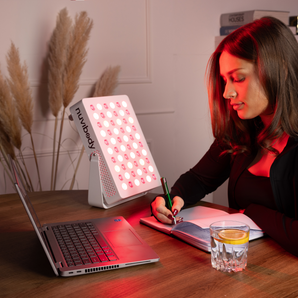
If you already use a panel for general wellness, follow the instructions for that model, including distance, session length and eye protection. Keep notes over a few weeks if you want to judge whether the routine suits you. Changes in energy or mood are personal observations, not a measurement of testosterone.
Direct testicular exposure needs separate medical advice. Long-term reproductive safety and an effective treatment dose have not been established for this use. Do not copy laser settings from an animal experiment or increase exposure to chase a hormone response.
Heat can impair sperm production, but the heat exposure in an experiment is not the same as the warmth from a panel. Exposure depends on the device, distance and session length. The older rat study found tissue changes with one near-infrared laser setup. This calls for caution with genital treatment. It does not show that normal panel use elsewhere damages fertility. [3] [4]
Stop if you develop pain, uncomfortable heat or irritation. Ask a clinician first if you have a condition or medicine that makes you sensitive to light. Do the same if you have active cancer in the area you plan to expose. For model-specific instructions, contact Nuvibody support.
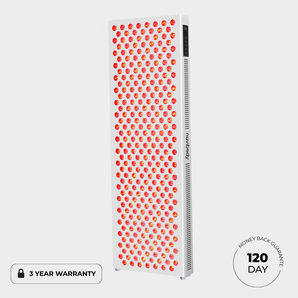
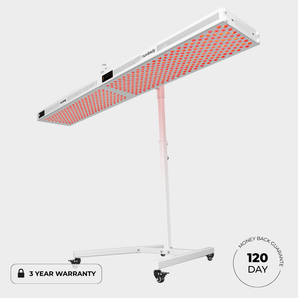
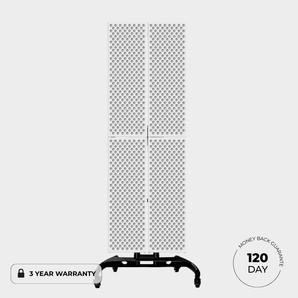
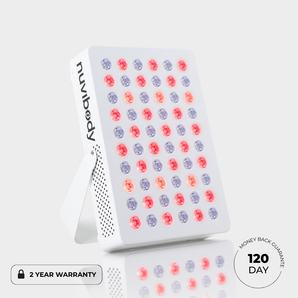
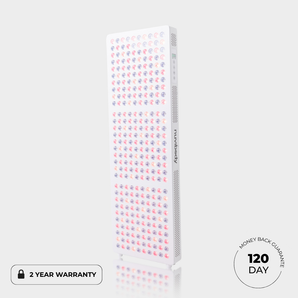
If you are exploring Nuvibody red light therapy panels, choose according to the intended use and the manual. The 120-day home trial and return terms can give you time to assess comfort and whether you enjoy the routine. Check the terms for your product. A trial period is not a clinical test or a promise of a hormone change.
Frequently asked questions
Can red light therapy increase testosterone naturally?
There are encouraging animal findings and a plausible cellular mechanism. A reliable testosterone increase from a home panel has not yet been demonstrated in people. Treat this as an emerging research area, and base decisions about low testosterone on a medical assessment. [1] [3] [4] [7]
Is red light therapy the same as “testicle tanning”?
Red and near-infrared light are different from the ultraviolet light used for tanning. The phrase blurs these distinctions and suggests a home treatment that the studies do not establish. Direct genital exposure should be discussed with a clinician rather than copied from social media.
Does better sperm movement mean better fertility?
It is a relevant finding, but only one part of the picture. Fertility depends on many factors in both partners. The laboratory studies described here measured sperm movement, not pregnancies or live births after home treatment. [5] [6]
Can a panel replace testosterone replacement therapy?
Do not change or stop prescribed testosterone because you start using a panel. Your clinician can help you weigh treatment options, monitor results and account for plans to have children. [10]
How quickly should I expect a change?
There is no validated timetable for a testosterone response to a home panel. For ordinary use, follow the manual and assess the routine over several weeks. If hormone levels are a concern, agree with your doctor whether testing is needed and when to repeat it.
What is the most useful next step if I have symptoms?
Book a GP appointment. Describe what has changed and how long it has lasted. Mention changes to sleep, exercise, medicines or supplements. That gives the assessment a clearer starting point than trying several new “testosterone boosters” at once. [9] [10]
Sources
- Golan et al. (2015). Age-Related Testosterone Decline is due to Waning of Both Testicular and Hypothalamic-Pituitary Function. Aging Male, 18(3), 201–204.
- Cotler (2015). A NASA discovery has current applications in orthopaedics. Current Orthopaedic Practice, 26(1), 72–74.
- Ahn, Kim & Rhee (2013). The effects of low level laser therapy (LLLT) on the testis in elevating serum testosterone level in rats. Biomedical Research, 24(1), 28–32.
- Aqajanpor et al. (2025). Photobiomodulation is more effective than long-term scrotal hyperthermia in improving testis tissue and spermatogenesis in mice with busulfan-induced azoospermia. Clinical and Experimental Reproductive Medicine, 52(3), 283–294.
- Ban Frangez et al. (2015). Photobiomodulation with light-emitting diodes improves sperm motility in men with asthenozoospermia. Lasers in Medical Science, 30, 235–240.
- Salman Yazdi et al. (2014). Effect of 830-nm diode laser irradiation on human sperm motility. Lasers in Medical Science, 29, 97–104.
- Zagatto et al. (2020). Full Body Photobiomodulation Therapy to Induce Faster Muscle Recovery in Water Polo Athletes: Preliminary Results. Photobiomodulation, Photomedicine, and Laser Surgery, 38(12), 766–772.
- European College of Neuropsychopharmacology (2016). Lack of interest in sex successfully treated by exposure to bright light. Conference press release reproduced by ScienceDaily, 19 September.
- Endocrine Society (2022). Hypogonadism in Men. Patient information.
- Endocrine Society (2018). Testosterone Therapy for Hypogonadism Guideline Resources. Clinical practice guidance.
- Zhao et al. (2012). Red light and the sleep quality and endurance performance of Chinese female basketball players. Journal of Athletic Training, 47(6), 673–678.
- Leproult & Van Cauter (2011). Effect of 1 week of sleep restriction on testosterone levels in young healthy men. JAMA, 305(21), 2173–2174.
- Giménez et al. (2023). Effects of Near-Infrared Light on Well-Being and Health in Human Subjects with Mild Sleep-Related Complaints: A Double-Blind, Randomized, Placebo-Controlled Study. Biology, 12(1), 60.
- Navarro-Ledesma et al. (2024). Outcomes of whole-body photobiomodulation on pain, quality of life, leisure physical activity, pain catastrophizing, kinesiophobia, and self-efficacy: a prospective randomized triple-blinded clinical trial with 6 months of follow-up. Frontiers in Neuroscience, 18, 1264821.
- Pinto et al. (2016). Photobiomodulation Therapy Improves Performance and Accelerates Recovery of High-Level Rugby Players in Field Test. Journal of Strength and Conditioning Research, 30(12), 3329–3338.
- Orssatto et al. (2019). Photobiomodulation Therapy Does Not Attenuate Fatigue and Muscle Damage in Judo Athletes: A Randomized, Triple-Blind, Placebo-Controlled Trial. Frontiers in Physiology, 10, 811.
- Chen et al. (2026). Effects of bright light and near-infrared light on insomnia symptoms in community-dwelling older adults: a randomized clinical trial. Photodiagnosis and Photodynamic Therapy, 58, 105425.
This article provides general information and does not replace medical advice, diagnosis or treatment. Speak with a qualified clinician about persistent symptoms, fertility concerns or changes to prescribed care.