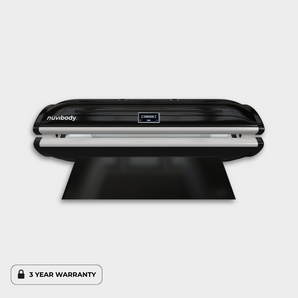
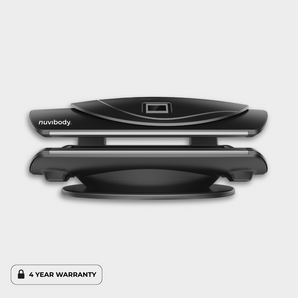
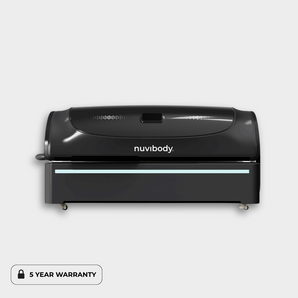
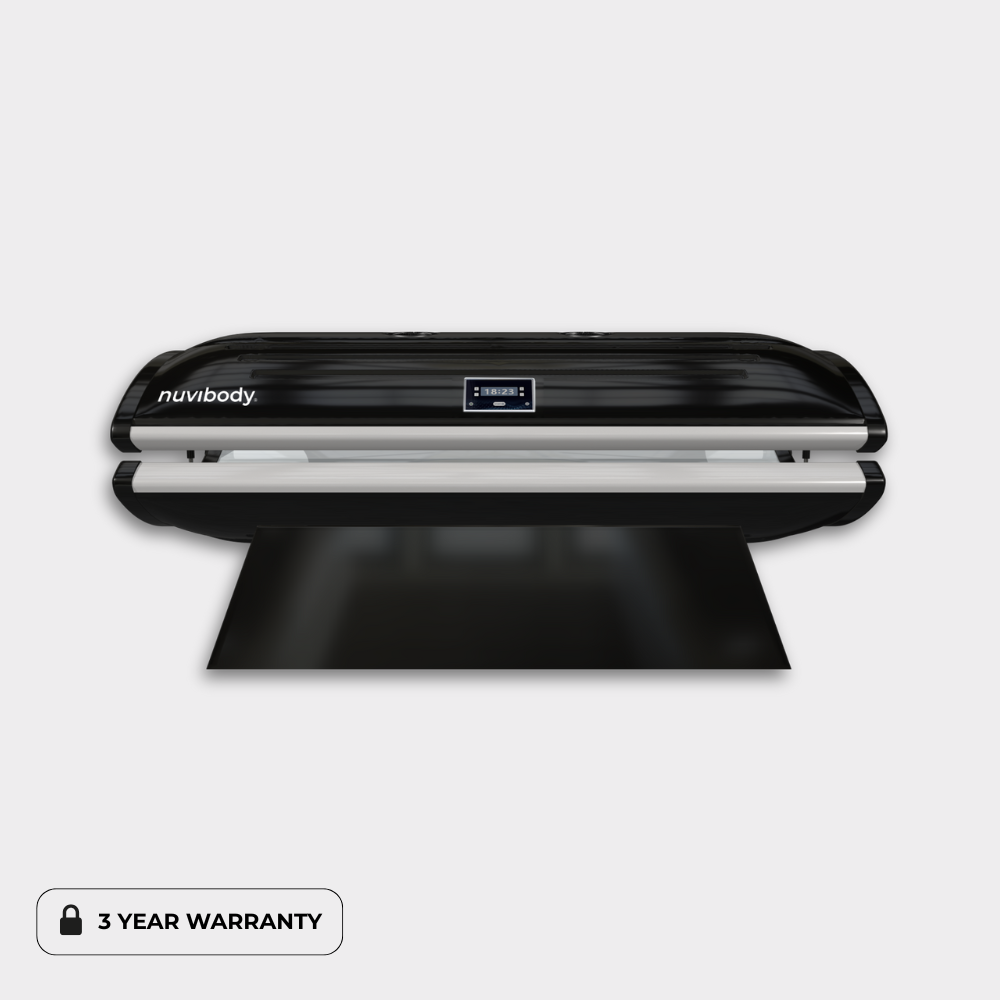
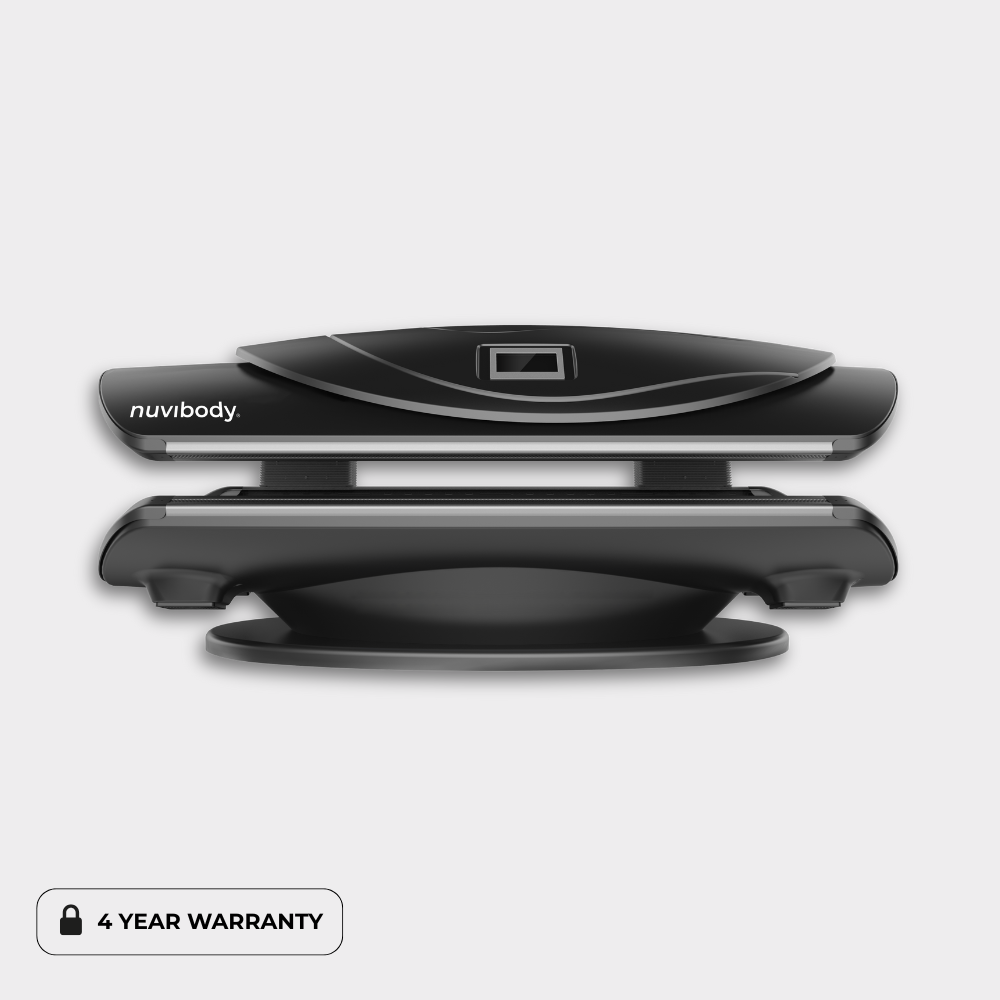
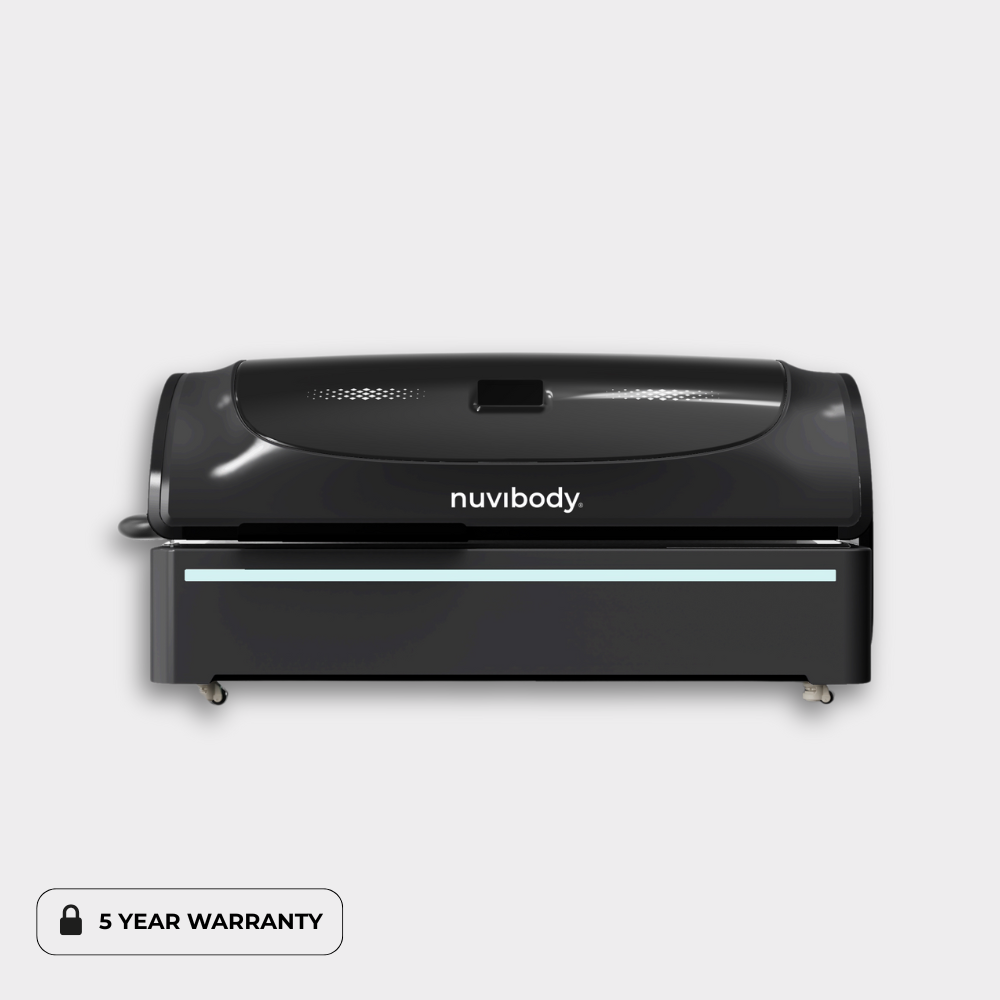
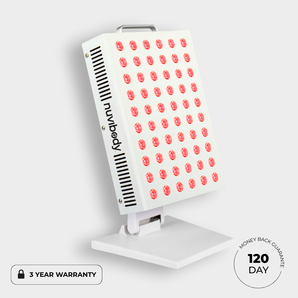
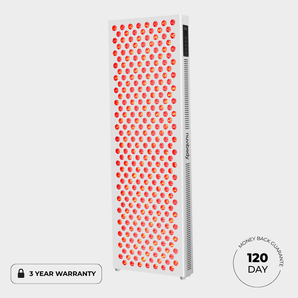
Specification comparison between products Nuvibody Lite Bed® Red Light Therapy Bed, Nuvibody Core Bed® Red Light Therapy Bed, Nuvibody Pro Bed® Red Light Therapy Bed
More LEDs or dual-spectrum LEDs provide more even and intense light coverage, increasing treatment area and effectiveness.
11,616 LEDs
26,880 LEDs
43,200 LEDs
Wavelengths
Different wavelengths have specific benefits like skin improvement and muscle recovery. The right combination determines the therapy’s effectiveness.
633 nm, 660nm, 850 nm, 940nm (customizable)
633, 660, 810, 850 & 940nm (customizable)
633, 660, 810, 850 & 940nm (customizable)
Light intensity (irradiance) determines how much energy your cells receive.
70 mW/cm²
119 mW/cm²
129 mW/cm²
Warranty
3 years warranty
4 years warranty
5 years warranty
LED Lifespan
The longer the lifespan, the less maintenance or replacement needed – crucial for intensive use.
100,000 hours
100,000 hours
100,000 hours
Power output
Higher power output (watts) usually means more powerful output, shorter sessions, and deeper effects – especially relevant for full-body treatments.
1500 Watt
4500 watt
6000 Watt
Treatment Time
Shorter treatment times indicate a more efficient device – ideal for professionals or users with a tight schedule.
20 min.
15 min.
10 min.
Dimensions
The size determines the treatment area; a larger device covers more skin in one session, making it more efficient for larger treatments.
194 × 86 × 100 cm
215 × 106 × 91cm
230 × 127 × 116 cm
Adjustable pulsing frequency of the light (Hz). Enables targeted stimulation (e.g., for recovery or energy boost).
1-10000HZ
1-10000HZ
1-10000HZ
Yes
Yes
Yes
Tablet Control
Models with tablet control let you manage the bed remotely – ideal for professionals with multiple rooms or self-service use.
Yes
Yes
Yes
Cooling System
A powerful cooling system ensures stable performance under intensive use – prevents overheating and extends lifespan.
Yes
Yes
33 cooling fans
Bluetooth Music System
Yes
Yes
Yes
Certifications
More and stricter certifications mean higher safety and reliability.
RoHS, CE, EMC, ISO90001
RoHS, CE, EMC, ISO90001
RoHS, CE, EMC, ISO13485
Review Nuvibody in professional environments
From high-end wellness clubs to rehabilitation clinics: Nuvibody is already helping progressive businesses offer a sought-after wellness experience that their clients can feel, see, and will happily return for.
Aspire Clinic - London
Aspire Clinic is a premier wellness center entirely focused on optimizing the whole body. With a complete array of recovery and longevity equipment, including red light therapy, ice baths, HBOT, sauna, and other advanced therapies, Aspire demonstrates how the Nuvibody Pro Bed fits into a serious, high-end environment focused on performance and well-being.
Simply Contoured Wellness combines aesthetics, recovery, and lymphatic health in one advanced wellness studio. Their Nuvibody Core Bed enables a more comprehensive treatment offering tailored to circulation, inflammation, recovery, and long-term well-being.
Nessenius Therapie is a private practice for physiotherapy, osteopathy, and personal training in the historical centre of Munich. Thanks to their scientifically-backed, human-centred approach, the Nuvibody Lite Bed is a reliable choice for clients seeking recovery, mobility support, and a more complete therapeutic experience.
Frequently Asked Questions About Red Light Therapy
Find answers to the most frequently asked questions about red light therapy here, including explanations of how it works, benefits and applications.
How much does a red light therapy bed cost?
A full-body bed from Nuvibody ranges from EUR 15,695 (LITE) to EUR 46,295 (PRO). The price depends on the number of LEDs, the irradiance, and the capacity for commercial use. Financing for up to 60 months is available.
What is the difference between a panel and a bed?
A panel illuminates one area at a time; a bed envelops your entire body in one session. A bed saves time and ensures even coverage, making it suitable for daily use and business settings with multiple clients per day. Still unsure? Check out our panels.
How much space and what type of power connection do I need?
Allow 2x3 meters of free space. The LITE works on a standard 230V outlet; for the CORE and PRO, you'll need a special connection. Our product experts will check in advance whether your location is suitable.
Is a red light bed suitable for business use?
Yes. The CORE and PRO are built for high volume in wellness centers, gyms, physiotherapy practices, and beauty salons. On our [link: business page], you can read more about capacity, payback period, and terms and conditions.
How long does a session in a bed last?
A full-body session typically lasts 10 to 15 minutes, depending on the model and your goal.
What is the difference between LITE, CORE, and PRO?
The LITE is for serious home use, the CORE for practices with regular use, and the PRO for clinics and high-volume settings, offering the highest irradiance and capacity. See the comparison table above.
How does delivery and installation work?
We handle everything with white-glove delivery: our team brings the bed to the final room, installs it in approximately 2 hours, and provides a full demo, so you can get started right away.
How long should I use red light therapy?
For optimal results, we recommend using red light therapy as part of your daily routine. Restoring mitochondrial function can take time. While some people notice improvements after a few weeks, for others it can take longer. It is important to continue using the product even after symptoms have subsided to maintain mitochondrial stimulation and ensure that the discomfort does not return.
What if red light therapy doesn't work for me?
We offer a 120-day Results or Money Back Guarantee! We understand that you may have tried many things to find relief for your problem and are fed up with promises that don't seem to work.
That's why we not only stand behind our product, but also behind your success. If you've tried red light therapy for 120 days and you haven't had any results? We don't want your money. Call, email or WhatsApp us and we'll take your device back.
Is red light therapy safe for the eyes?
Research shows that red light therapy is safe for the eyes and can help with conditions such as cataracts and macular degeneration. It can improve vision, especially in people over 40. If you experience discomfort from bright light, you can close your eyes or look past them for more comfort during treatment. If you have sensitive eyes, you can use the included eye protection.
What is the difference between red and near infrared light?
Red light (630 nm & 660 nm) is visible, while infrared light (810 nm & 850 nm) is not.
Red light (650 nm) is well absorbed by skin tissue and stimulates collagen production and skin health.
Infrared light (850 nm) penetrates deeper into tissues, organs and joints, helping to reduce inflammation and repair. With Nuvibody, you can use red and infrared light together or separately.
Do you offer a warranty?
Yes, of course! All our red light therapy lamps come with a 3-year warranty.
Red light therapy beds
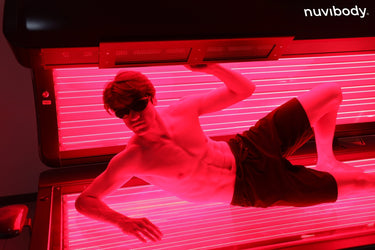
A red light therapy bed treats your entire body in one session. While a panel illuminates one zone at a time, a full-body bed envelops you from head to toe. A complete session thus takes 10 to 15 minutes instead of moving from zone to zone. This makes a bed the logical choice for consistent daily use at home, or for commercial use where throughput time per client matters.
How does a red light therapy bed work?
Red (630 - 660 nm) and near-infrared light (810 - 940 nm) are absorbed into the cells by the enzyme cytochrome-c-oxidase in the mitochondria, which can support the production of ATP (cell energy). This is the most researched mechanism of action behind red light therapy. Read how red light therapy works or more about its benefits here.
What are red light therapy beds used for?
Red light therapy is being researched for skin rejuvenation and post-exercise recovery. Clinical studies show effects on the skin, and meta-analyses suggest it can reduce muscle soreness after strenuous training, although the evidence varies by application. We summarise the studies in our knowledge base.
Three models, three goals
The LITE for serious home use, the CORE and PRO for wellness centres, physiotherapy and sports practices, and clinics that serve multiple clients daily. All Nuvibody beds are CE, RoHS, and EMC certified, produced in an ISO-certified facility, with up to 5 years warranty and personal installation and service guidance.
Red light therapy supports general well-being and does not replace medical advice or treatment. Always consult a doctor if in doubt, using medication, or during pregnancy.
Sources:
Mechanism of action: Hamblin (2018), cytochrome-c-oxidase as primary light absorber, red/NIR increases ATP. Photochem Photobiol. pubmed.ncbi.nlm.nih.gov/29164625
Safety: Glass (2023), systematic review of oncological safety, no link with serious adverse events or malignancies. Aesthetic Surgery Journal. ncbi.nlm.nih.gov/pmc/articles/PMC10309024
Muscle recovery: systematic review with meta-analysis (19 studies, 672 participants), low certainty that RLT before exercise reduces muscle pain (ScienceDirect S1360859225002591); meta-analysis DOMS with moderate to large effects on muscle pain and strength (mdpi.com/2411-5142/10/3/277).
Need to think about it?
Receive valuable info to make the right choice when you're ready.