

Does red light therapy help with Parkinson's disease?
Red light therapy has been investigated as an adjunctive treatment for Parkinson's disease since 2018, with promising results in small clinical studies. The Parkinson Vereniging (Parkinson's Association) discusses the research with cautious optimism but rightly emphasizes that it is not yet a replacement for regular care. This article outlines what science truly says, what form of red light therapy is used in the studies, and what you can realistically expect if you want to try it at home in addition to your standard treatment.
What does the research say about red light therapy and Parkinson's?
The evidence is cautiously positive, limited in scope, and largely comes from a single Australian research team. The five-year follow-up study by Liebert et al., published in BMC Neurology in 2024, followed eight Parkinson's patients who continued to use photobiomodulation (the scientific term for red light therapy) at home. Several participants maintained or improved their motor function, sense of smell, sleep, and cognition over those five years, a striking contrast to the progressive nature of the disease.
A randomized sham-controlled study in eClinicalMedicine from 2023 investigated a special transcranial helmet in Parkinson's patients aged 59 to 85. After 12 weeks (72 treatment sessions), several motor outcomes showed improvement compared to the placebo group. Importantly: these are feasibility studies with small numbers of participants. Larger phase-3 trials are yet to follow before we can speak of proven efficacy.
How could red light therapy work for Parkinson's?
At the cellular level, red light and near-infrared light activate mitochondria, the energy factories of your cells. In Parkinson's, mitochondrial dysfunction is a central part of the disease process, particularly in the dopamine-producing cells of the substantia nigra. Increased ATP production means more energy for cellular repair and possibly neuroprotection.
However, there's an important caveat: red light doesn't penetrate deep enough to directly reach the basal ganglia, where Parkinson's pathology occurs. The Parkinson Vereniging explicitly points this out. Researchers suspect that effects are achieved indirectly through blood flow, anti-inflammation, and — a growing area of research — the gut-brain axis.
Why do researchers focus the light on the abdomen instead of the head?
Recent research points to a surprising route: treatment of the abdomen and neck instead of (or in addition to) the head. A 2022 case series in Photobiomodulation, Photomedicine and Laser Surgery showed that remote application to the abdomen and neck 3 times a week for 12 weeks resulted in clinical improvements in Parkinson's patients, without direct treatment of the head. A follow-up study found positive changes in the gut microbiome (Firmicutes/Bacteroidetes ratio) after this treatment.
This aligns with the growing understanding that Parkinson's may start in the gut years before motor symptoms appear. In practice, this means: if you have a Nuvibody panel, abdominal and neck irradiation is at least as relevant as the face or head. Read more about how red light therapy works at the cellular level for the full mechanical explanation.
What is the difference between a medical helmet and a consumer panel?
This is where honesty counts. The Australian studies used a specially developed transcranial helmet with LEDs placed against the skull to maximize light penetration into the brain. A regular red light therapy panel is not designed for this. However, with a panel, you can perform other effective applications that have shown positive results in research: irradiation of the abdomen, neck, face, and body for general cellular energy, anti-inflammation, and better sleep.
Many Parkinson's patients experience non-motor symptoms, such as sleep problems, fatigue, and low mood, as equally burdensome as tremors. Red light at home can make a difference precisely for these complaints through improved melatonin production and mitochondrial support. How sleep is incorporated into recovery can be read on our page about red light and night rest.
Can you combine red light therapy with levodopa and other Parkinson's medication?
Yes, in all published studies, participants continued to use their regular medication (such as levodopa). Photobiomodulation is being investigated as an adjunctive therapy, not as a replacement. There are no known interactions with Parkinson's medication, and the treatment itself is non-invasive and pharmacologically passive.
Important: always discuss it with your neurologist or Parkinson's nurse before starting, especially if you are participating in an ongoing study or if your medication regimen has recently changed. It is not an alternative to your treatment plan, nor a reason to reduce medication on your own initiative.
What is a realistic expectation if you want to try it at home?
Don't expect a miracle cure. The studies show improvements in some patients, not all, and the effect size varies. Realistically, you will benefit most from:
- Non-motor symptoms: better sleep, more energy, mood
- General well-being: anti-inflammation, blood circulation, muscle recovery
- Supplement to physiotherapy and exercise: faster recovery after exertion
Expect at least 12 weeks of consistent use before you can evaluate anything, as was also maintained in the clinical protocols. Give it time: in the published studies, treatment was performed 3 times a week over a period of months to years.
Which device is suitable for someone with Parkinson's?
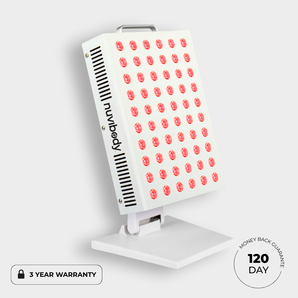
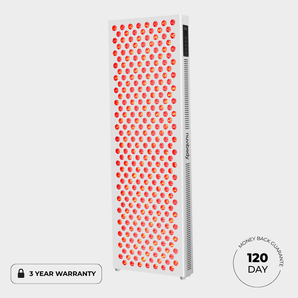
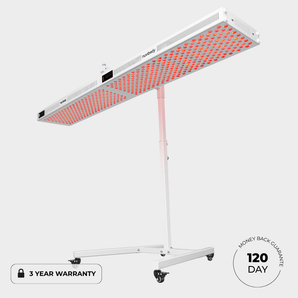
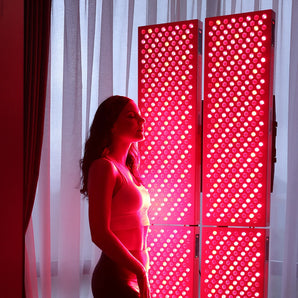
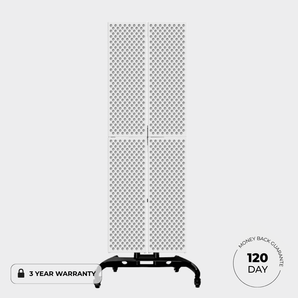
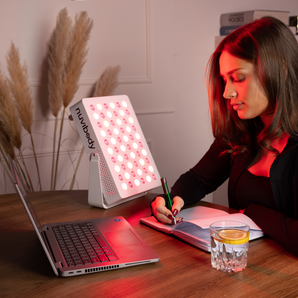
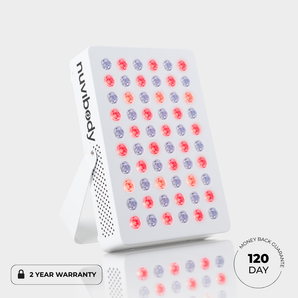
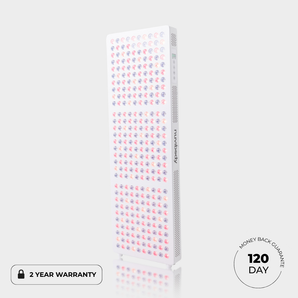
For someone who wants to try it at home in addition to regular care, a panel with multiple wavelengths (630, 660, 810, and 850nm) is important. The CORE 1500 provides full-body irradiation in one session, ideal if you want to treat the abdomen and body in addition to the head and neck according to the gut-brain study protocols. For targeted sessions on the neck, abdomen, or face, the compact CORE 300 is sufficient.
All Nuvibody panels comply with CE, RoHS, and EMC standards and are manufactured in an ISO-certified facility. The 120-day trial period gives you over 3 months to experience whether it adds to your daily well-being. Want to discuss what suits your situation? Call +31 85 250 2810 or email support@nuvibody.com, and we will advise you without sales pressure.
Practical protocol as an addition to your standard treatment
Follow this schedule for at least 12 weeks to notice any effect. Place the panel 15 to 45 cm from the skin, choose the combination of red + near-infrared, and treat unclothed for maximum absorption.
- 3 times a week, 10-15 minutes per zone
- Zones used in research: head (frontal), neck, abdomen
- For non-motor complaints: evening session supports sleep
- For general well-being: morning or afternoon, in a fixed rhythm
- Do not look directly into the eyes during treatment of the head or face
For broad applications for stiffness and pain, also read our page on red light therapy and pain relief, which is relevant for many Parkinson's patients with muscle stiffness and joint complaints.
Conclusion
Does red light therapy help with Parkinson's? The honest answer is: research points cautiously in a positive direction, especially as a supplement to standard treatment, but definitive evidence from large trials is still lacking. What we do know is that the treatment is safe, with no known side effects, and that its action through mitochondrial activation and possibly the gut-brain axis is biologically logical.
For someone with Parkinson's, red light therapy at home can be a valuable addition, provided you remain realistic about what it can do and continue to work with your neurologist. Start with 3 sessions per week, treat the abdomen and neck in addition to the head according to research protocols, and give it 12 weeks before drawing conclusions. The 120-day trial period is specifically to give you that leeway.