Red light therapy for sleep: better sleep effortlessly
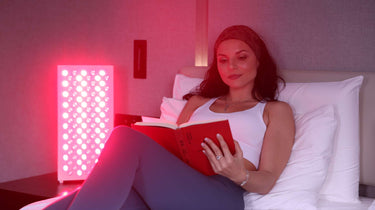
Having trouble falling asleep or waking up feeling unrested? With red light therapy for sleep, you support your natural rhythm and help your body relax better. Instead of supplements or medication, you work with your body. By using the right light at the right time, you rebalance your biological clock and improve your sleep quality.
Protocol
How to use red light therapy for sleep improvement
Use the panel as a fixed routine in the evening; it signals your body that it's time to relax and produce melatonin.
Duration10 – 15 min
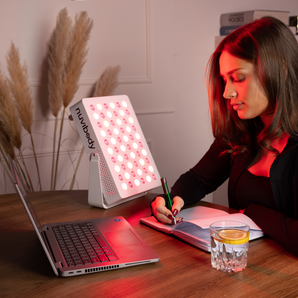
Distance30 – 50 cm
FrequencyDaily
MomentEvening
Tip 1
Plan 60–90 minutes before bedtime
The effect on melatonin production is strongest if you go to sleep within 60–90 minutes after the session. Going to bed at the same time every night trains your biological clock.
Tip 2
Dim your surroundings beforehand
Turn off bright white and blue lights before the session. Red light works best as a counterpart to artificial light. Dim lamps or use candlelight as a supplement
Tip 3
Put away all screens
Use the session as a mindful conclusion to your day. No phone, no laptop. 15 minutes of conscious letting go significantly enhances the relaxing effect
Tip 4
Use 's only red light
Near-infrared has a stimulating effect on cell activity and the nervous system. Before sleeping, only use the red wavelengths. Reserve NIR for the morning or post-workout.
Scientifically substantiated: Red light (630–660 nm) does not suppress melatonin production — in contrast to blue light — and can support it when used in the evening. It stabilizes the circadian rhythm, shortens the time it takes to fall asleep, and improves sleep depth with regular use.
Experience the power of red light therapy for sleep improvement
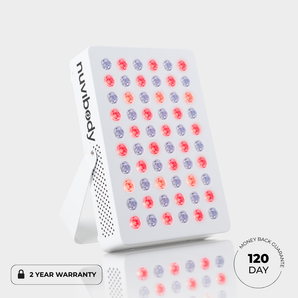
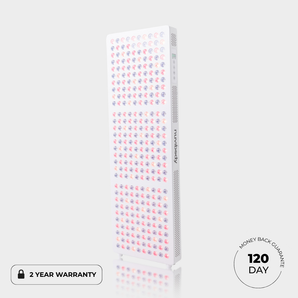
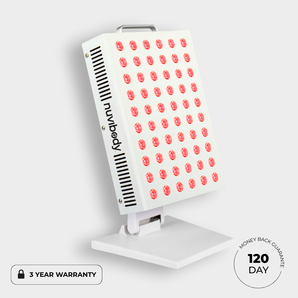
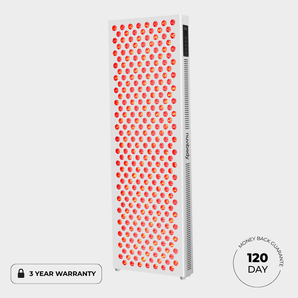
With our top-class red light therapy lamps, you are making a long-term investment in sleep. Discover the options below and experience the power of light. Our lamps are safe, easy to use, and offer clinically proven results for better sleep.
Red light therapy sleep uses specific wavelengths of red and near-infrared light that support your natural rhythm. Unlike blue light (from phones and screens), red light does not disrupt the production of melatonin, the hormone that helps you fall asleep.
In fact, it can even help prepare your body for rest, especially in the evening hours.
How does red light therapy work for sleep improvement?
Your body operates on a biological rhythm (circadian rhythm) that dictates when you are awake or sleepy. Light plays a crucial role in this.
Red light therapy helps by signaling to your body that it's time to relax. It supports natural melatonin production and helps you disengage from the negative effects of artificial (blue) light.
As a result, your body can more easily enter a relaxed, sleep-ready state.
With regular use, many people find they fall asleep faster and sleep more deeply. Sleep often feels more restful and less interrupted, so you wake up more energetic in the morning.
In addition, red light therapy helps to relax body and mind after a busy day. Because sleep plays an important role in recovery, better sleep also affects your mood, focus, and physical performance.
Does red light therapy really work for sleep?
More and more research shows how important light is for your sleep rhythm. While blue light inhibits melatonin production, red light has a much calmer and supportive effect.
Many users notice a difference in their sleep quality within a few weeks. The key lies in consistent use: by choosing the same time daily, you help your body build a healthy rhythm.
How to use red light therapy to sleep better
Using it is simple and easy to incorporate into your evening routine. Most people use red light therapy in the evening, for example 30 to 60 minutes before going to sleep.
You sit or lie relaxed in front of the panel and let the light act on your body for about 10 to 20 minutes. During this time, your body gradually calms down.
By repeating this daily, you give your body a clear signal that it's time to relax and head towards sleep.
Discover which lamp suits you
Take the quiz and discover your perfect setup based on your preferences.
Frequently Asked Questions about Red Light Therapy and Sleep
Find answers here to the most frequently asked questions about red light therapy, including explanations of its function, benefits, and applications.
Why is red light better for your sleep than normal light?
Normal (blue/white) light suppresses melatonin, the hormone that makes you sleepy. Red light has much less of an impact on this, allowing your body to better prepare for sleep.
When do you use red light therapy for sleep?
The best way to use red light therapy:
in the evening (1–2 hours before sleep)
as part of your evening routine
This helps your body to gradually wind down.
How long should you use red light therapy before sleep?
Usually 10 to 20 minutes is sufficient. The most important thing is to do this consistently, for example daily or several times a week.
Can red light therapy help with sleep problems?
Yes, especially for:
difficulty falling asleep
a disturbed sleep rhythm
lots of screen exposure in the evening
It helps your body to more easily enter "sleep mode."
Does red light therapy work for jet lag or a disrupted rhythm?
It can support the resetting of your biological clock. By using red light in the evening, you signal to your body that it's time to relax.
Is red light therapy safe to use in the evening?
Yes, red light contains no harmful UV radiation and does not disturb your sleep. In fact, it is one of the few forms of light you can safely use in the evening.
What is the effect of red light on melatonin?
Red light barely suppresses melatonin. This keeps your natural sleep cycle intact, which helps you fall asleep faster.
Which is better for sleep: red light or blocking blue light?
Both help. Avoiding blue light is essential, but using red light in the evening can provide additional support for your sleep rhythm.
Expert advice
Expert advice
Read these 7 crucial tips before purchasing a Red Light Therapy Lamp.