Red Light Therapy for Hormonal Balance: Support Your Hormones from Within
Do you suffer from mood swings, fatigue, an irregular cycle, or other hormonal complaints? With red light therapy for hormonal balance, you support your endocrine system at a cellular level.
Protocol
How to use red light therapy for hormonal balance
Use the panel daily as a fixed routine, focusing on the thyroid, lower abdomen, or lower back. Consistency is essential here; hormones respond to prolonged and regular stimulation.
Duration10 – 20 min
Distance10 – 30 cm
FrequencyDaily
MomentMorning or early afternoon
Tip 1
Target thyroid or lower abdomen
The thyroid gland (front of the throat) is one of the most important hormone glands in your body. Point the panel at this area for 5–10 minutes to support thyroid function. For cycle-related complaints, point the panel at the lower abdomen.
Tip 2
Use in the morning as a fixed routine
Hormone production follows your daily rhythm. By using red light therapy every morning at the same time, you support the natural peak in cortisol production and help your body develop a stable rhythm.
Tip 3
Be consistent over multiple weeks
Hormonal changes are not a quick fix. Red light therapy works cumulatively: the effects build up with daily use over 4–8 weeks. Plan it as a regular habit, not as an incidental treatment.
Tip 4
Combine red and near-infrared light
For hormonal support, the combination of red light (630–660 nm) and near-infrared (810–850 nm) is most effective. Near-infrared penetrates deeper into the tissue and reaches the glands and organs involved in hormone production.
Scientifically substantiated: Red and near-infrared light (630–850 nm) stimulate mitochondrial function in hormone-producing glands such as the thyroid, adrenal glands, and gonads. Research shows that these wavelengths improve blood circulation, reduce oxidative stress, and support cell activity in endocrine tissues. This can contribute to more stable hormone production and a reduction in hormonal complaints with regular use.
Experience the power of red light therapy for hormonal balance
With our top-class red light therapy lamps, you are making a long-term investment in your hormonal balance. Discover the options below and experience the power of light. Our lamps are safe and easy to use.
Red light therapy hormonal balance Red light therapy for hormonal balance works by allowing specific wavelengths of red and near-infrared light to penetrate deep into your tissues. There, they support the glands and organs responsible for your hormone production, such as the thyroid, adrenal glands, and gonads.
Hormones control almost every process in your body: your energy, mood, sleep, weight, fertility, and metabolism. When these become imbalanced, you feel it in multiple areas simultaneously. Red light therapy helps the cells in these glands work more efficiently, allowing your body to restore its own balance.
How does red light therapy work for hormonal balance?
Your endocrine system, the network of glands that produces hormones, is highly dependent on good blood flow, cell health, and low oxidative stress. Chronic stress, sleep deprivation, and environmental factors can throw this system off balance.
Red light therapy supports this process by stimulating mitochondrial activity in hormone-producing cells. Better cell activity means improved blood circulation, reduced inflammation, and more stable hormone production.
The result: fewer hormonal complaints, a more stable mood, increased energy, and a more regular cycle pattern.
Benefits of Red Light Therapy for Hormonal Balance
With regular use, many people notice that hormonal complaints such as mood swings, fatigue, and an irregular cycle gradually decrease. The overall balance improves: you feel more stable, clearer, and more energetic.
In addition, red light therapy supports thyroid function, helps reduce oxidative stress – a significant disruptive factor in hormonal imbalance – and has a positive effect on sleep quality and skin health, both strongly linked to your hormonal state.
Does red light therapy really work for hormonal balance?
Scientific research into the effects of red light on the endocrine system is growing rapidly. Studies show that red and near-infrared light improves blood flow in glandular tissue, stimulates mitochondrial activity, and reduces oxidative stress, all factors that directly contribute to healthier hormone production.
Many users notice a difference in how stable they feel after 4 to 8 weeks of consistent use. The key lies in regularity: daily use at the same time gives your body time to restore its own hormonal rhythm.
How to use red light therapy for hormonal balance
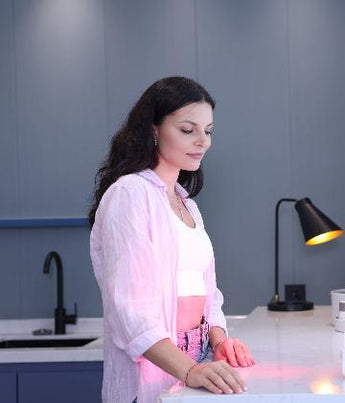
Its use is simple and fits well into a regular morning or afternoon routine. Most people direct the panel towards the thyroid (front of the throat), the lower abdomen, or the lower back, depending on where their complaints are located.
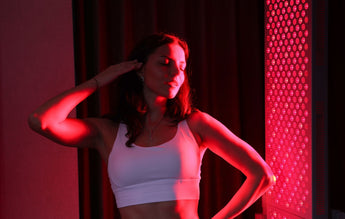
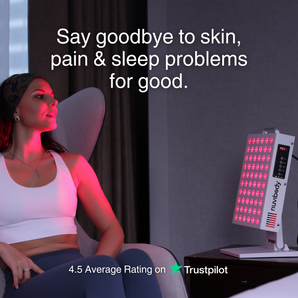
You sit or stand relaxed in front of the panel and let the light work for 10 to 20 minutes. During this time, the wavelengths support cellular activity in your hormone glands.
By repeating this daily, you give your body a consistent, natural impulse to restore its own hormonal balance, without side effects and without medication.
Discover which lamp suits you
Take the quiz and discover your perfect setup based on your preferences.
Frequently Asked Questions about Red Light Therapy and Sleep
Find answers here to the most frequently asked questions about red light therapy, including explanations of its function, benefits, and applications.
How does red light therapy help with hormonal complaints?
Red light stimulates mitochondrial activity in hormone-producing glands such as the thyroid and adrenal glands. This improves blood flow, reduces oxidative stress, and supports more stable hormone production.
When do you use red light therapy for hormonal balance?
The best way to use red light therapy:
In the morning, as part of a fixed routine
At the same time each day, for maximum hormonal support
Consistency is more essential for hormonal complaints than for other complaints.
How long does it take to see results?
For hormonal complaints, red light therapy works cumulatively. Most people notice a clear difference in mood, energy levels, and cycle regularity after 4 to 8 weeks of daily use.
Can red light therapy help with thyroid issues?
Red light therapy can support thyroid function by improving blood flow and cell activity in thyroid tissue. If you have diagnosed thyroid conditions, always consult a doctor before starting.
Does red light help with PMS or menstrual complaints?
Yes, red light therapy can be supportive for:
Mood swings around the cycle
Cramps and discomfort during menstruation
An irregular cycle pattern
For best results, aim the panel at the lower abdomen.
Which wavelengths work best for hormonal complaints?
The combination of red light (630–660 nm) and near-infrared (810–850 nm) is most effective. Near-infrared penetrates deeper into the tissue, reaching the glands and organs directly involved in hormone production.
Is red light therapy safe for hormonal balance?
Red light therapy is non-invasive and does not contain harmful UV radiation. In the case of diagnosed hormonal conditions or medication use, we recommend consulting a doctor beforehand.
What is the difference between red light therapy for energy versus hormonal balance?
Both applications work via mitochondrial stimulation, but the difference lies in their focus. For energy, you target large muscle groups and use it as a morning boost. For hormonal balance, you specifically target glandular areas such as the thyroid or lower abdomen, and long-term consistency is even more important.
Expert advice
Expert advice
Read these 7 crucial tips before purchasing a Red Light Therapy Lamp.



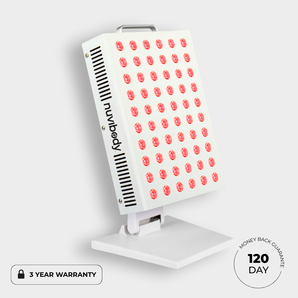

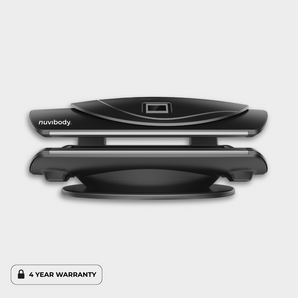
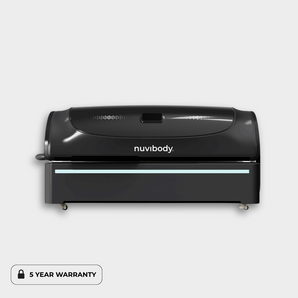
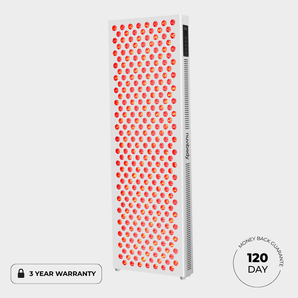 CORE 1500 Nuvibody® Red Light Therapy device


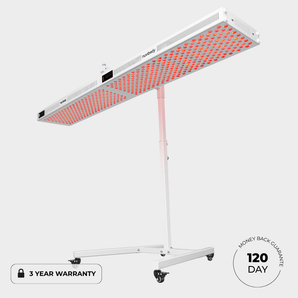 CORE 1500 DUO Combi Deal Nuvibody® Red Light Therapy device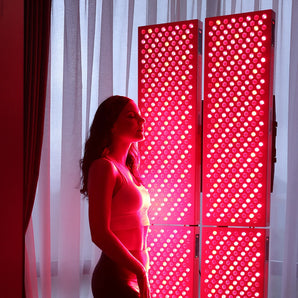
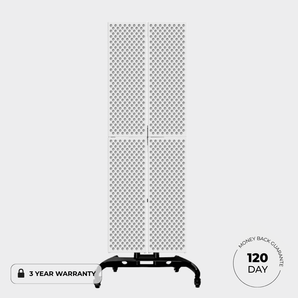 CORE 1500 QUAD Combi Deal Nuvibody® Red Light Therapy device